Tag: smart contracts

  • Parametric Travel Insurance for Automated Flight Delay Payouts: The Future of Travel Protection

    Parametric Travel Insurance for Automated Flight Delay Payouts: The Future of Travel Protection

    Introduction

    Air travel has become an indispensable component of modern global commerce and tourism. However, it remains plagued by systemic vulnerabilities, with flight delays and cancellations topping the list of traveler grievances. Historically, recovering losses from disrupted flights required navigating tedious, bureaucratic claim processes with traditional insurance providers. Travelers were forced to retain physical receipts, submit complex claims forms, and wait weeks—if not months—for compensation.

    This inefficient paradigm is undergoing a radical transformation. The emergence of parametric travel insurance for automated flight delay payouts represents a monumental shift in how risk is managed and mitigated in the travel sector. By leveraging real-time data feeds, smart contracts, and decentralized technologies, insurtech companies can now offer immediate financial relief to travelers the very moment a delay occurs, completely eliminating manual claims processes. This article explores the mechanisms, benefits, technology stack, and future trajectory of this disruptive insurance model.

    What is Parametric Travel Insurance?

    To understand the value of parametric travel insurance for automated flight delay payouts, it is essential first to differentiate it from traditional indemnity-based insurance.

    Traditional insurance operates on the principle of indemnification. Under this model, a policyholder must prove the exact financial loss suffered due to an event (such as purchasing meals or booking an emergency hotel room during a delay) and submit proof of these expenses for subjective assessment by an insurance claims adjuster.

    In contrast, parametric insurance (often referred to as index-based insurance) does not compensate for the actual loss sustained. Instead, it pays out a predefined, set amount based on the occurrence of a specific, measurable event—the “parameter.” For travel delay insurance, this parameter is typically a specific time threshold (e.g., a flight delayed by exactly 120 minutes or more) measured against official global aviation databases.

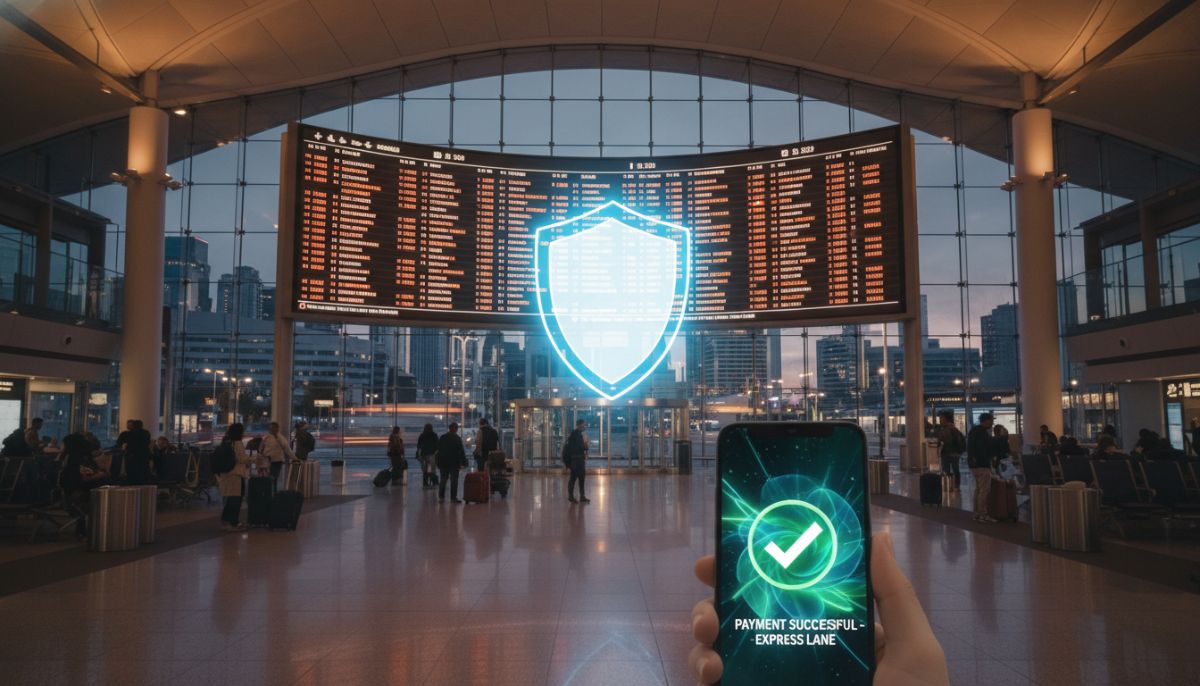
    A futuristic conceptual illustration depicting real-time flight tracking data streams merging into a digital shield, symbolizing automated, data-driven parametric insurance protection for global travelers, clean vector style, blue and cyan color palette

    How Automated Flight Delay Payouts Work

    The seamless nature of parametric travel insurance is powered by end-to-end automation. The typical lifecycle of a parametric flight delay policy operates through the following steps:

    1. Policy Purchase: The traveler purchases a parametric policy prior to departure. During checkout, they provide their flight number and specify their preferred payout method (e.g., direct bank transfer, digital wallet, or credit card refund).
    2. Parameter Definition: The contract establishes a clear, objective trigger. For instance, if Flight XY123 is delayed by 2 hours or more past its scheduled departure time, a payout of $150 is triggered automatically.
    3. Real-Time Monitoring: The insurtech platform integrates with independent, authoritative global aviation data providers (such as FlightStats, FlightAware, or OAG) via APIs. These data providers act as “oracles,” feeding real-time flight status updates to the insurance platform’s engine.
    4. Automated Triggering: The moment the delay threshold is breached according to the official data feed, the system automatically validates the event. No claim filing is required by the traveler.
    5. Instant Payout Execution: The platform automatically initiates a transaction to transfer the pre-agreed compensation directly to the traveler’s account. Often, the traveler receives a notification and the funds on their mobile device while still waiting in the airport terminal.

    Parametric vs. Traditional Travel Insurance

    To highlight why parametric travel insurance for automated flight delay payouts is rapidly gaining traction among frequent flyers and corporate travel departments, consider the comparative breakdown below:

    Feature Traditional Travel Insurance Parametric Travel Insurance
    Claim Initiation Manual submission required by the policyholder Fully automated; zero action required by policyholder
    Proof of Loss Mandatory (receipts, boarding passes, delay certificates) None (triggered solely by external flight database verification)
    Payout Trigger Subjective assessment of financial damage incurred Objective parameter met (e.g., delay time >= specified threshold)
    Payout Processing Time 15 to 45 business days on average Near-instantaneous (minutes to hours from the trigger event)
    Payout Structure Reimbursement up to a capped limit of actual costs Fixed cash amount paid directly to the user
    Usage of Funds Strictly restricted to covered emergency expenses Unrestricted; passenger can spend the payout at their discretion

    The Key Benefits of Automated Flight Delay Insurance

    1. Unrivaled Speed and Convenience

    By automating the entire claim and payment workflow, parametric policies provide immediate liquidity when travelers need it most. Receiving an instant payout of $100 or $200 during a three-hour delay allows a traveler to comfortably purchase airport lounge access, premium dining, or entertainment to ease the discomfort of their wait, without worrying about saving receipts for future reimbursement.

    2. Complete Transparency and Trust

    One of the primary friction points in traditional insurance is the lack of trust between the insurer and the insured. Disputes often arise regarding policy exclusions, definition of terms, or what constitutes a valid expense. Parametric insurance relies on objective, third-party data. Because the data source is independent and mutually agreed upon beforehand, there is no room for dispute. If the flight status board says the plane is delayed by 121 minutes, and the threshold is 120 minutes, the payout is executed without argument.

    3. Reduced Administrative Overheads for Insurers

    Traditional claims handling is incredibly labor-intensive, requiring claim adjusters to manually review documents, verify authenticity, and process payments. This high administrative cost often makes micro-insurance policies financially unviable. Parametric automation removes human labor from the equation, allowing insurers to operate with micro-margins and offer highly affordable premiums to consumers.

    “Parametric travel insurance represents a fundamental paradigm shift from indemnification to instant mitigation. It replaces the anxiety of manual claim processing with the absolute certainty of automated restitution, reconstructing trust between insurers and consumers.”

    A close-up shot of a traveler sitting in an airport terminal, looking relieved while viewing a mobile phone notification showing an instant cash payout deposit, with blurred airplanes visible through the large glass window in the background, professional corporate photography

    The Technology Stack: Smart Contracts, Oracles, and APIs

    The viability of parametric travel insurance for automated flight delay payouts rests heavily on modern fintech architecture. At the core of advanced parametric products is blockchain technology and smart contracts.

    A smart contract is a self-executing digital agreement with the terms of the contract directly written into lines of code. It exists across a decentralized blockchain network. When applied to travel insurance, the smart contract securely holds the premium funds and contains simple logic: `IF flight_delay >= 120 minutes, THEN release payment to passenger_wallet`.

    To bridge the gap between the blockchain-based smart contract and real-world occurrences, oracles are deployed. Decentralized oracle networks (such as Chainlink) securely fetch data from off-chain sources (like aviation databases) and deliver it to the blockchain. This setup guarantees that the data triggering the payout is tamper-proof, accurate, and completely immune to manipulation by either the insurance company or the traveler.

    Challenges and Current Limitations

    While the technology offers immense promise, the widespread adoption of parametric travel insurance must overcome several challenges:

    • Basis Risk: This occurs when there is a mismatch between the parametric trigger and the actual loss experienced. For example, a traveler might experience a 115-minute delay that causes them to miss an expensive connecting flight, yet they receive zero payout because the policy trigger was set strictly at 120 minutes.
    • Integration Costs: Establishing high-speed, secure, and reliable API connections with premium aviation data providers can be costly, demanding sophisticated cybersecurity measures.
    • Regulatory Hurdling: Insurance regulations globally are traditionally designed around indemnity frameworks. Insurtech startups often face hurdles trying to classify parametric payouts under traditional legal definitions of insurance, requiring close coordination with financial authorities.

    A conceptual illustration depicting high-tech servers, blockchain network nodes, and data streams connecting global flights to digital wallets, highlighting secure blockchain integration, highly detailed, clean modern tech aesthetic

    Future Outlook

    The future of parametric travel insurance for automated flight delay payouts is exceptionally bright. As open banking and instant payment rails (such as FedNow in the United States and SEPA Instant in Europe) become globally ubiquitous, payouts will become even faster—moving from hours to literal seconds.

    Furthermore, we are witnessing the integration of parametric insurance directly into booking platforms. In the near future, when purchasing a flight ticket via online travel agencies (OTAs) or directly from airlines, passengers will be offered automated parametric delay protection as a one-click add-on. This seamless B2B2C integration will drive massive scale and make parametric protection a standard expectation for travelers worldwide.

    Conclusion

    Parametric travel insurance for automated flight delay payouts is more than just a technological novelty; it is a profound reimagining of consumer financial protection. By removing friction, eliminating paperwork, and establishing absolute transparency through smart contracts and real-time aviation data, it directly addresses the pain points of the modern traveler. As technology continues to mature and consumer demand for instant gratification grows, parametric systems will undoubtedly become the standard benchmark for travel protection in the digital age.