Category: Finance & Insurance

  • Navigating the Future: Top Autonomous Vehicle Liability Insurance Providers and the Shift in Mobility Risk

    Navigating the Future: Top Autonomous Vehicle Liability Insurance Providers and the Shift in Mobility Risk

    The global automotive landscape is undergoing its most profound transformation since the invention of the assembly line. As autonomous vehicles (AVs) transition from controlled test tracks to public highways, the traditional paradigms of traffic safety, vehicle ownership, and legal liability are being completely rewritten. With the human driver gradually replaced by sophisticated artificial intelligence, lidar sensors, and real-time decision-making algorithms, the question of “who is at fault” in an accident becomes highly complex. Consequently, the commercial demand for specialized autonomous vehicle liability insurance providers has surged, creating a highly competitive, data-driven niche within the global insurance sector.

    In this comprehensive analysis, we explore the shifting dynamics of liability risk, profile the pioneering autonomous vehicle liability insurance providers, examine the unique structure of AV coverage policies, and detail the technical hurdles that underwritiers must overcome to protect manufacturers, operators, and the public alike.

    The Fundamental Shift in Liability: From Driver to Machine

    For over a century, auto insurance underwriting has relied on actuarial data centered on human behavior. Factors such as a driver’s age, driving history, location, and credit score have traditionally dictated premium costs. However, in an autonomous future, human error—which currently accounts for approximately 94% of all motor vehicle crashes—will be systematically phased out.

    Instead, liability is pivoting decisively toward product liability, software integrity, cyber-resiliency, and hardware maintenance. When an autonomous vehicle is involved in a collision, the focus shifts from the passenger inside the vehicle to the OEM (Original Equipment Manufacturer), the software developer who coded the navigation algorithms, the sensor manufacturer, or the telecommunications provider maintaining the vehicle’s low-latency 5G connection. This complex web of potential fault demands specialized risk transfer solutions that only progressive autonomous vehicle liability insurance providers can offer.

    A futuristic autonomous vehicle navigating a smart city intersection with digital data overlays representing risk analysis, safety metrics, and telematics connectivity

    Key Autonomous Vehicle Liability Insurance Providers Shaping the Market

    As the market matures, several global insurance giants, specialized reinsurers, and innovative insurtech startups have emerged as leaders in underwriting autonomous vehicle risks. These entities are not only providing coverage but are actively collaborating with tech developers and regulatory bodies to establish industry benchmarks.

    1. Munich Re

    As one of the world’s largest reinsurers, Munich Re has been at the absolute forefront of autonomous vehicle risk engineering. They offer highly tailored product liability coverages specifically designed for Level 4 and Level 5 autonomous fleets. Their solutions address algorithmic malfunction, sensor degradation, and cyber-attack vulnerabilities.

    2. Swiss Re

    Swiss Re has partnered extensively with automotive OEMs and technology platforms to develop dynamic risk assessment models. By leveraging real-time telematics data, Swiss Re helps design insurance products that scale premiums based on the operational design domain (ODD) of the autonomous fleet.

    3. Liberty Mutual (Commercial Division)

    Liberty Mutual has dedicated specialized underwriting units to support autonomous shuttle operators, delivery robot fleets, and autonomous trucking networks. They focus heavily on a hybrid model that blends traditional commercial auto liability with comprehensive technology errors and omissions (E&O) coverage.

    4. AXA XL

    AXA XL has established a prominent reputation in the European and North American markets for underwriting large-scale autonomous transit trials. Their policies are highly modular, allowing fleet operators to scale liability limits as their geographic deployment areas expand.

    5. Tesla Insurance

    While primarily acting as a captive insurance provider for its own vehicles, Tesla’s proprietary insurance model represents a significant disruption. By utilizing real-time driving behavior and autopilot sensor data directly from the vehicle, Tesla is pioneering a vertically integrated model of risk management that circumvents traditional third-party underwriters.

    Comparing Key Autonomous Vehicle Liability Insurance Providers

    To better understand how different players in the insurance market approach this emerging technology, the table below provides a structured comparison of their target markets, liability focus areas, and risk assessment methodologies.

    Provider Target Market Key Coverage Specializations Primary Risk Assessment Method
    Munich Re Autonomous OEMs, Tier-1 Tech Suppliers Algorithmic failure, global product liability, cyber disruption Long-term actuarial modeling, technology audits
    Swiss Re Shared mobility fleets, urban AV transit Operational Design Domain (ODD) safety, dynamic commercial liability Real-time vehicle telematics & API integration
    Liberty Mutual Middle-mile autonomous trucks, delivery robots Hybrid physical-to-digital liability, traditional commercial auto Fleet historical safety data, operational safety protocols
    AXA XL Municipal AV transit, industrial site robotics High-limit public liability, infrastructure integration risks Geographic mapping, site-specific risk assessments
    Tesla Insurance Proprietary Tesla passenger and commercial fleets Direct-to-consumer real-time safety scoring, autopilot integration Continuous sensor telemetry and fleet-wide algorithmic learning

    Core Components of an Autonomous Vehicle Liability Policy

    Unlike standard personal or commercial auto policies, a comprehensive policy offered by modern autonomous vehicle liability insurance providers must weave together several distinct threads of insurance law and risk management.

    A close-up of a central processing unit and LIDAR sensors of an autonomous commercial truck, with glowing blue light trails representing software processing and safety underwriting

    Product Liability & Algorithm Coverage

    If a self-driving system misinterprets a road barrier or fails to recognize a pedestrian due to a sensor blind spot, the fault lies within the product’s design or manufacturing. Product liability coverage protects the OEM and software developer from catastrophic lawsuits resulting from systemic software failures or hardware malfunctions.

    Cybersecurity and Ransomware Protection

    Autonomous vehicles are, fundamentally, mobile computers connected to the cloud. They are vulnerable to remote hacking, data breaches, and ransomware attacks that could disable entire commercial fleets simultaneously. Leading insurers must integrate robust cyber insurance riders into their standard liability packages to cover business interruption and digital forensics costs.

    Infrastructure and V2X (Vehicle-to-Everything) Failure

    Many advanced AVs rely on real-time data feeds from smart city infrastructure, traffic lights, and other vehicles (V2X communication). If an external signal transmitter fails or broadcasts corrupted data, leading to a multi-vehicle accident, identifying the liable party becomes incredibly difficult. Policies must account for these external technical dependencies.

    “The transition from driver-centric liability to technology-centric product liability represents the most significant legal and financial paradigm shift in modern transportation history. Insurers who fail to master real-time telematics data will find themselves obsolete in an autonomous world.”

    Challenges Facing Underwriters and Policyholders

    Despite the clear market opportunity, autonomous vehicle liability insurance providers face immense hurdles in accurately pricing and managing these novel risks.

    The Actuarial Data Gap

    Traditional insurance relies on decades of historical claims data to calculate loss ratios and set accurate premiums. Because autonomous vehicles are still in their relative infancy, there is no statistically significant, long-term historical dataset for Level 4 and Level 5 operations. Insurers must rely on predictive computer simulations and highly guarded, proprietary testing data provided directly by the developers.

    Fragmented Regulatory Frameworks

    Insurance regulation is inherently local, governed by state, provincial, or national laws. In the United States, for instance, a patchwork of varying state-level regulations dictates how autonomous vehicle testing and commercialization are governed. Developing a unified commercial liability policy that complies with contradictory regional laws remains an administrative nightmare for global carriers.

    The High Cost of Specialized Repairs

    When an autonomous vehicle is involved in even a minor fender-bender, the cost of repair is exponentially higher than that of a traditional vehicle. Lidar sensors, radar arrays, high-definition cameras, and onboard computing units are incredibly expensive to replace and calibrate. This drives up the physical damage claim costs, which in turn inflates the overall premium rates.

    An insurance underwriter analyzing real-time telematics data of self-driving fleets on high-tech multi-monitor screens with interactive risk maps

    The Path Forward: Data Collaboration and Real-Time Risk Profiling

    To bridge these gaps, the future of autonomous vehicle underwriting lies in deep, real-time data collaboration. Forward-thinking autonomous vehicle liability insurance providers are no longer operating as passive financial safety nets. Instead, they are becoming active technology partners.

    By integrating proprietary insurance software directly into the vehicle’s operating system via secure APIs, insurers can monitor operational safety metrics in real-time. If a fleet operator chooses to deploy vehicles in severe weather conditions (such as heavy snow or dense fog) that exceed the vehicle’s optimal operational domain, the insurer can adjust the liability premium dynamically for those specific hours of operation. Conversely, fleets that demonstrate superior algorithmic safety records and undergo rigorous over-the-air (OTA) software updates can be rewarded with immediate premium reductions.

    Conclusion

    The rise of autonomous mobility does not spell the end of the auto insurance industry; rather, it marks the dawn of a highly sophisticated, multi-billion-dollar commercial liability sector. As personal auto insurance eventually declines, the market for enterprise-grade product, cyber, and operational liability will expand exponentially.

    For fleet operators, software developers, and OEMs, selecting the right autonomous vehicle liability insurance providers is not merely a compliance checkbox. It is a vital strategic partnership that will determine their long-term viability, public trust, and ultimate success in the driverless revolution. By understanding the intricate complexities of digital risk, underwriting technology, and shifting legal landscapes, businesses can confidently navigate the open roads of tomorrow.

  • Parametric Travel Insurance for Automated Flight Delay Payouts: The Future of Travel Protection

    Parametric Travel Insurance for Automated Flight Delay Payouts: The Future of Travel Protection

    Introduction

    Air travel has become an indispensable component of modern global commerce and tourism. However, it remains plagued by systemic vulnerabilities, with flight delays and cancellations topping the list of traveler grievances. Historically, recovering losses from disrupted flights required navigating tedious, bureaucratic claim processes with traditional insurance providers. Travelers were forced to retain physical receipts, submit complex claims forms, and wait weeks—if not months—for compensation.

    This inefficient paradigm is undergoing a radical transformation. The emergence of parametric travel insurance for automated flight delay payouts represents a monumental shift in how risk is managed and mitigated in the travel sector. By leveraging real-time data feeds, smart contracts, and decentralized technologies, insurtech companies can now offer immediate financial relief to travelers the very moment a delay occurs, completely eliminating manual claims processes. This article explores the mechanisms, benefits, technology stack, and future trajectory of this disruptive insurance model.

    What is Parametric Travel Insurance?

    To understand the value of parametric travel insurance for automated flight delay payouts, it is essential first to differentiate it from traditional indemnity-based insurance.

    Traditional insurance operates on the principle of indemnification. Under this model, a policyholder must prove the exact financial loss suffered due to an event (such as purchasing meals or booking an emergency hotel room during a delay) and submit proof of these expenses for subjective assessment by an insurance claims adjuster.

    In contrast, parametric insurance (often referred to as index-based insurance) does not compensate for the actual loss sustained. Instead, it pays out a predefined, set amount based on the occurrence of a specific, measurable event—the “parameter.” For travel delay insurance, this parameter is typically a specific time threshold (e.g., a flight delayed by exactly 120 minutes or more) measured against official global aviation databases.

    A futuristic conceptual illustration depicting real-time flight tracking data streams merging into a digital shield, symbolizing automated, data-driven parametric insurance protection for global travelers, clean vector style, blue and cyan color palette

    How Automated Flight Delay Payouts Work

    The seamless nature of parametric travel insurance is powered by end-to-end automation. The typical lifecycle of a parametric flight delay policy operates through the following steps:

    1. Policy Purchase: The traveler purchases a parametric policy prior to departure. During checkout, they provide their flight number and specify their preferred payout method (e.g., direct bank transfer, digital wallet, or credit card refund).
    2. Parameter Definition: The contract establishes a clear, objective trigger. For instance, if Flight XY123 is delayed by 2 hours or more past its scheduled departure time, a payout of $150 is triggered automatically.
    3. Real-Time Monitoring: The insurtech platform integrates with independent, authoritative global aviation data providers (such as FlightStats, FlightAware, or OAG) via APIs. These data providers act as “oracles,” feeding real-time flight status updates to the insurance platform’s engine.
    4. Automated Triggering: The moment the delay threshold is breached according to the official data feed, the system automatically validates the event. No claim filing is required by the traveler.
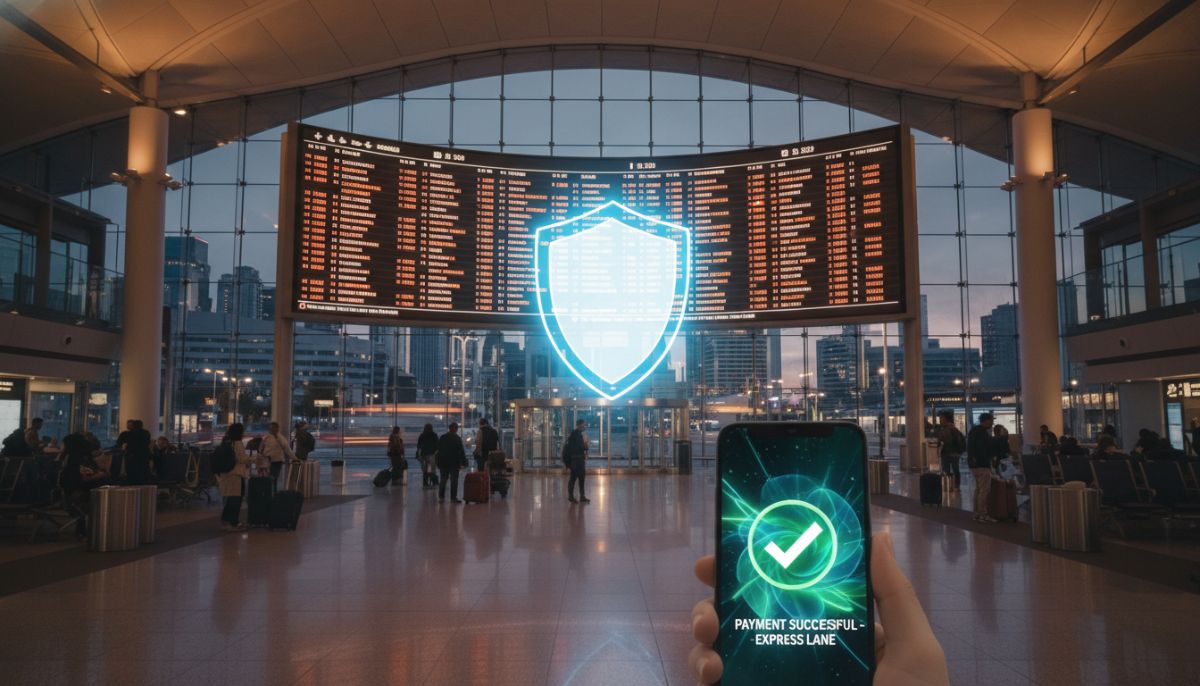
    5. Instant Payout Execution: The platform automatically initiates a transaction to transfer the pre-agreed compensation directly to the traveler’s account. Often, the traveler receives a notification and the funds on their mobile device while still waiting in the airport terminal.

    Parametric vs. Traditional Travel Insurance

    To highlight why parametric travel insurance for automated flight delay payouts is rapidly gaining traction among frequent flyers and corporate travel departments, consider the comparative breakdown below:

    Feature Traditional Travel Insurance Parametric Travel Insurance
    Claim Initiation Manual submission required by the policyholder Fully automated; zero action required by policyholder
    Proof of Loss Mandatory (receipts, boarding passes, delay certificates) None (triggered solely by external flight database verification)
    Payout Trigger Subjective assessment of financial damage incurred Objective parameter met (e.g., delay time >= specified threshold)
    Payout Processing Time 15 to 45 business days on average Near-instantaneous (minutes to hours from the trigger event)
    Payout Structure Reimbursement up to a capped limit of actual costs Fixed cash amount paid directly to the user
    Usage of Funds Strictly restricted to covered emergency expenses Unrestricted; passenger can spend the payout at their discretion

    The Key Benefits of Automated Flight Delay Insurance

    1. Unrivaled Speed and Convenience

    By automating the entire claim and payment workflow, parametric policies provide immediate liquidity when travelers need it most. Receiving an instant payout of $100 or $200 during a three-hour delay allows a traveler to comfortably purchase airport lounge access, premium dining, or entertainment to ease the discomfort of their wait, without worrying about saving receipts for future reimbursement.

    2. Complete Transparency and Trust

    One of the primary friction points in traditional insurance is the lack of trust between the insurer and the insured. Disputes often arise regarding policy exclusions, definition of terms, or what constitutes a valid expense. Parametric insurance relies on objective, third-party data. Because the data source is independent and mutually agreed upon beforehand, there is no room for dispute. If the flight status board says the plane is delayed by 121 minutes, and the threshold is 120 minutes, the payout is executed without argument.

    3. Reduced Administrative Overheads for Insurers

    Traditional claims handling is incredibly labor-intensive, requiring claim adjusters to manually review documents, verify authenticity, and process payments. This high administrative cost often makes micro-insurance policies financially unviable. Parametric automation removes human labor from the equation, allowing insurers to operate with micro-margins and offer highly affordable premiums to consumers.

    “Parametric travel insurance represents a fundamental paradigm shift from indemnification to instant mitigation. It replaces the anxiety of manual claim processing with the absolute certainty of automated restitution, reconstructing trust between insurers and consumers.”

    A close-up shot of a traveler sitting in an airport terminal, looking relieved while viewing a mobile phone notification showing an instant cash payout deposit, with blurred airplanes visible through the large glass window in the background, professional corporate photography

    The Technology Stack: Smart Contracts, Oracles, and APIs

    The viability of parametric travel insurance for automated flight delay payouts rests heavily on modern fintech architecture. At the core of advanced parametric products is blockchain technology and smart contracts.

    A smart contract is a self-executing digital agreement with the terms of the contract directly written into lines of code. It exists across a decentralized blockchain network. When applied to travel insurance, the smart contract securely holds the premium funds and contains simple logic: `IF flight_delay >= 120 minutes, THEN release payment to passenger_wallet`.

    To bridge the gap between the blockchain-based smart contract and real-world occurrences, oracles are deployed. Decentralized oracle networks (such as Chainlink) securely fetch data from off-chain sources (like aviation databases) and deliver it to the blockchain. This setup guarantees that the data triggering the payout is tamper-proof, accurate, and completely immune to manipulation by either the insurance company or the traveler.

    Challenges and Current Limitations

    While the technology offers immense promise, the widespread adoption of parametric travel insurance must overcome several challenges:

    • Basis Risk: This occurs when there is a mismatch between the parametric trigger and the actual loss experienced. For example, a traveler might experience a 115-minute delay that causes them to miss an expensive connecting flight, yet they receive zero payout because the policy trigger was set strictly at 120 minutes.
    • Integration Costs: Establishing high-speed, secure, and reliable API connections with premium aviation data providers can be costly, demanding sophisticated cybersecurity measures.
    • Regulatory Hurdling: Insurance regulations globally are traditionally designed around indemnity frameworks. Insurtech startups often face hurdles trying to classify parametric payouts under traditional legal definitions of insurance, requiring close coordination with financial authorities.

    A conceptual illustration depicting high-tech servers, blockchain network nodes, and data streams connecting global flights to digital wallets, highlighting secure blockchain integration, highly detailed, clean modern tech aesthetic

    Future Outlook

    The future of parametric travel insurance for automated flight delay payouts is exceptionally bright. As open banking and instant payment rails (such as FedNow in the United States and SEPA Instant in Europe) become globally ubiquitous, payouts will become even faster—moving from hours to literal seconds.

    Furthermore, we are witnessing the integration of parametric insurance directly into booking platforms. In the near future, when purchasing a flight ticket via online travel agencies (OTAs) or directly from airlines, passengers will be offered automated parametric delay protection as a one-click add-on. This seamless B2B2C integration will drive massive scale and make parametric protection a standard expectation for travelers worldwide.

    Conclusion

    Parametric travel insurance for automated flight delay payouts is more than just a technological novelty; it is a profound reimagining of consumer financial protection. By removing friction, eliminating paperwork, and establishing absolute transparency through smart contracts and real-time aviation data, it directly addresses the pain points of the modern traveler. As technology continues to mature and consumer demand for instant gratification grows, parametric systems will undoubtedly become the standard benchmark for travel protection in the digital age.