Category: Commercial Mobility

  • Navigating the Future: Top Autonomous Vehicle Liability Insurance Providers and the Shift in Mobility Risk

    Navigating the Future: Top Autonomous Vehicle Liability Insurance Providers and the Shift in Mobility Risk

    The global automotive landscape is undergoing its most profound transformation since the invention of the assembly line. As autonomous vehicles (AVs) transition from controlled test tracks to public highways, the traditional paradigms of traffic safety, vehicle ownership, and legal liability are being completely rewritten. With the human driver gradually replaced by sophisticated artificial intelligence, lidar sensors, and real-time decision-making algorithms, the question of “who is at fault” in an accident becomes highly complex. Consequently, the commercial demand for specialized autonomous vehicle liability insurance providers has surged, creating a highly competitive, data-driven niche within the global insurance sector.

    In this comprehensive analysis, we explore the shifting dynamics of liability risk, profile the pioneering autonomous vehicle liability insurance providers, examine the unique structure of AV coverage policies, and detail the technical hurdles that underwritiers must overcome to protect manufacturers, operators, and the public alike.

    The Fundamental Shift in Liability: From Driver to Machine

    For over a century, auto insurance underwriting has relied on actuarial data centered on human behavior. Factors such as a driver’s age, driving history, location, and credit score have traditionally dictated premium costs. However, in an autonomous future, human error—which currently accounts for approximately 94% of all motor vehicle crashes—will be systematically phased out.

    Instead, liability is pivoting decisively toward product liability, software integrity, cyber-resiliency, and hardware maintenance. When an autonomous vehicle is involved in a collision, the focus shifts from the passenger inside the vehicle to the OEM (Original Equipment Manufacturer), the software developer who coded the navigation algorithms, the sensor manufacturer, or the telecommunications provider maintaining the vehicle’s low-latency 5G connection. This complex web of potential fault demands specialized risk transfer solutions that only progressive autonomous vehicle liability insurance providers can offer.

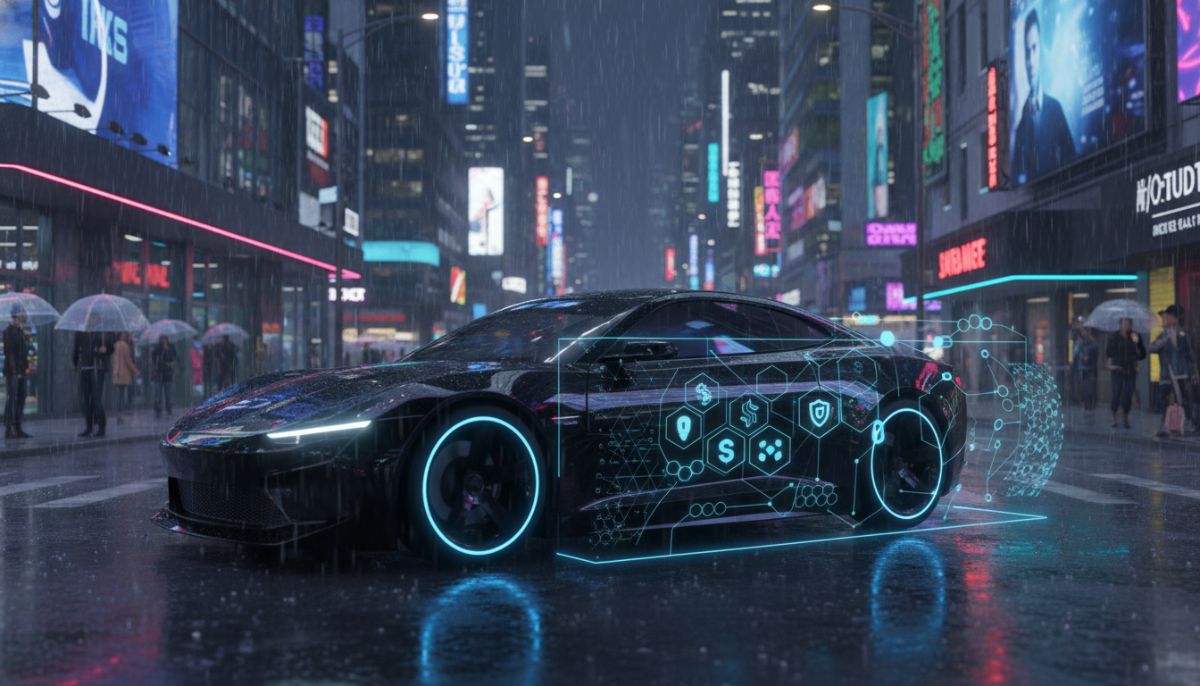
    A futuristic autonomous vehicle navigating a smart city intersection with digital data overlays representing risk analysis, safety metrics, and telematics connectivity

    Key Autonomous Vehicle Liability Insurance Providers Shaping the Market

    As the market matures, several global insurance giants, specialized reinsurers, and innovative insurtech startups have emerged as leaders in underwriting autonomous vehicle risks. These entities are not only providing coverage but are actively collaborating with tech developers and regulatory bodies to establish industry benchmarks.

    1. Munich Re

    As one of the world’s largest reinsurers, Munich Re has been at the absolute forefront of autonomous vehicle risk engineering. They offer highly tailored product liability coverages specifically designed for Level 4 and Level 5 autonomous fleets. Their solutions address algorithmic malfunction, sensor degradation, and cyber-attack vulnerabilities.

    2. Swiss Re

    Swiss Re has partnered extensively with automotive OEMs and technology platforms to develop dynamic risk assessment models. By leveraging real-time telematics data, Swiss Re helps design insurance products that scale premiums based on the operational design domain (ODD) of the autonomous fleet.

    3. Liberty Mutual (Commercial Division)

    Liberty Mutual has dedicated specialized underwriting units to support autonomous shuttle operators, delivery robot fleets, and autonomous trucking networks. They focus heavily on a hybrid model that blends traditional commercial auto liability with comprehensive technology errors and omissions (E&O) coverage.

    4. AXA XL

    AXA XL has established a prominent reputation in the European and North American markets for underwriting large-scale autonomous transit trials. Their policies are highly modular, allowing fleet operators to scale liability limits as their geographic deployment areas expand.

    5. Tesla Insurance

    While primarily acting as a captive insurance provider for its own vehicles, Tesla’s proprietary insurance model represents a significant disruption. By utilizing real-time driving behavior and autopilot sensor data directly from the vehicle, Tesla is pioneering a vertically integrated model of risk management that circumvents traditional third-party underwriters.

    Comparing Key Autonomous Vehicle Liability Insurance Providers

    To better understand how different players in the insurance market approach this emerging technology, the table below provides a structured comparison of their target markets, liability focus areas, and risk assessment methodologies.

    Provider Target Market Key Coverage Specializations Primary Risk Assessment Method
    Munich Re Autonomous OEMs, Tier-1 Tech Suppliers Algorithmic failure, global product liability, cyber disruption Long-term actuarial modeling, technology audits
    Swiss Re Shared mobility fleets, urban AV transit Operational Design Domain (ODD) safety, dynamic commercial liability Real-time vehicle telematics & API integration
    Liberty Mutual Middle-mile autonomous trucks, delivery robots Hybrid physical-to-digital liability, traditional commercial auto Fleet historical safety data, operational safety protocols
    AXA XL Municipal AV transit, industrial site robotics High-limit public liability, infrastructure integration risks Geographic mapping, site-specific risk assessments
    Tesla Insurance Proprietary Tesla passenger and commercial fleets Direct-to-consumer real-time safety scoring, autopilot integration Continuous sensor telemetry and fleet-wide algorithmic learning

    Core Components of an Autonomous Vehicle Liability Policy

    Unlike standard personal or commercial auto policies, a comprehensive policy offered by modern autonomous vehicle liability insurance providers must weave together several distinct threads of insurance law and risk management.

    A close-up of a central processing unit and LIDAR sensors of an autonomous commercial truck, with glowing blue light trails representing software processing and safety underwriting

    Product Liability & Algorithm Coverage

    If a self-driving system misinterprets a road barrier or fails to recognize a pedestrian due to a sensor blind spot, the fault lies within the product’s design or manufacturing. Product liability coverage protects the OEM and software developer from catastrophic lawsuits resulting from systemic software failures or hardware malfunctions.

    Cybersecurity and Ransomware Protection

    Autonomous vehicles are, fundamentally, mobile computers connected to the cloud. They are vulnerable to remote hacking, data breaches, and ransomware attacks that could disable entire commercial fleets simultaneously. Leading insurers must integrate robust cyber insurance riders into their standard liability packages to cover business interruption and digital forensics costs.

    Infrastructure and V2X (Vehicle-to-Everything) Failure

    Many advanced AVs rely on real-time data feeds from smart city infrastructure, traffic lights, and other vehicles (V2X communication). If an external signal transmitter fails or broadcasts corrupted data, leading to a multi-vehicle accident, identifying the liable party becomes incredibly difficult. Policies must account for these external technical dependencies.

    “The transition from driver-centric liability to technology-centric product liability represents the most significant legal and financial paradigm shift in modern transportation history. Insurers who fail to master real-time telematics data will find themselves obsolete in an autonomous world.”

    Challenges Facing Underwriters and Policyholders

    Despite the clear market opportunity, autonomous vehicle liability insurance providers face immense hurdles in accurately pricing and managing these novel risks.

    The Actuarial Data Gap

    Traditional insurance relies on decades of historical claims data to calculate loss ratios and set accurate premiums. Because autonomous vehicles are still in their relative infancy, there is no statistically significant, long-term historical dataset for Level 4 and Level 5 operations. Insurers must rely on predictive computer simulations and highly guarded, proprietary testing data provided directly by the developers.

    Fragmented Regulatory Frameworks

    Insurance regulation is inherently local, governed by state, provincial, or national laws. In the United States, for instance, a patchwork of varying state-level regulations dictates how autonomous vehicle testing and commercialization are governed. Developing a unified commercial liability policy that complies with contradictory regional laws remains an administrative nightmare for global carriers.

    The High Cost of Specialized Repairs

    When an autonomous vehicle is involved in even a minor fender-bender, the cost of repair is exponentially higher than that of a traditional vehicle. Lidar sensors, radar arrays, high-definition cameras, and onboard computing units are incredibly expensive to replace and calibrate. This drives up the physical damage claim costs, which in turn inflates the overall premium rates.

    An insurance underwriter analyzing real-time telematics data of self-driving fleets on high-tech multi-monitor screens with interactive risk maps

    The Path Forward: Data Collaboration and Real-Time Risk Profiling

    To bridge these gaps, the future of autonomous vehicle underwriting lies in deep, real-time data collaboration. Forward-thinking autonomous vehicle liability insurance providers are no longer operating as passive financial safety nets. Instead, they are becoming active technology partners.

    By integrating proprietary insurance software directly into the vehicle’s operating system via secure APIs, insurers can monitor operational safety metrics in real-time. If a fleet operator chooses to deploy vehicles in severe weather conditions (such as heavy snow or dense fog) that exceed the vehicle’s optimal operational domain, the insurer can adjust the liability premium dynamically for those specific hours of operation. Conversely, fleets that demonstrate superior algorithmic safety records and undergo rigorous over-the-air (OTA) software updates can be rewarded with immediate premium reductions.

    Conclusion

    The rise of autonomous mobility does not spell the end of the auto insurance industry; rather, it marks the dawn of a highly sophisticated, multi-billion-dollar commercial liability sector. As personal auto insurance eventually declines, the market for enterprise-grade product, cyber, and operational liability will expand exponentially.

    For fleet operators, software developers, and OEMs, selecting the right autonomous vehicle liability insurance providers is not merely a compliance checkbox. It is a vital strategic partnership that will determine their long-term viability, public trust, and ultimate success in the driverless revolution. By understanding the intricate complexities of digital risk, underwriting technology, and shifting legal landscapes, businesses can confidently navigate the open roads of tomorrow.